Sunday, June 14, 2020

Mark 1:15 Jesus' Single Sentence Sermon

Mark 1:15
“The time has come,” He said. “The kingdom of God has come near. Repent and believe the good news!”

It seems these days that everyone on social media is looking to string together that single sentence; the one that will knock some sense into everyone, wake them up to the big problems facing them and get them to start moving in the right direction. Truthfully, creating one sentence that can do all of these things is incredibly difficult, as individual words have power and must be used with great care. Afew times people have said this to me, "Why do people try to sum up their messages in one sentence, when Jesus didn't even do that?" It is true that Jesus spoke elloquently on thousands of issues using a great deal of words (one need only look at the Sermon on the Mount in Matthew chapters 5 through 7 to see), but what those people said to me did make me wonder if Jesus ever condensed His message to the masses into one single sentence. To my surprise, He did and He did it perfectly.

As it is written in the first chapter of Mark, Jesus started His ministry when He "went to Galilee, proclaiming the good news of God" (Mark 1:14b). The word for good news in the original text is εὐαγγέλιον (euangelion), which we today translate as Gospel, good news. Jesus' final command to His followers is to "go into all the world and preach the Gospel to all creation," so it is important for us as Christ's followers to know what the Gospel is (Mark 16:15).

Here in the first chapter of Mark Jesus says the Gospel is that the time has come! (Some translatations say that the time is at hand, and I appreciate this imagery). The time is here. It is now! Why has the time come? Because the Kingdom of God is near; the long prohpesied return of God's full glory to the world so that He may reign among us forever and ever (Daniel 2:44) is drawing close. What should we do knowing that God's Kingdom is coming soon? We should all repent! The word for repent here in the original text is μετανοέω (metanoeó), and it means to turn around. It is written that "we all, like sheep, have gone astray, each of us has turned to our own way" and turned away from God (Issiah 53:6a). We need to turn around away from our way. To follow our way instead of God's way is to sin, and it is written  that "the wages of sin is death" (Romans 6:23a). If we are all going to die because of our sins, then the only good news we could possibly receive is to know that there is a way for us to be saved from our incoming rightful punishment. That's the good news, the Gospel. We can be saved through believing the good news of Jesus Christ. As it is written in the gospel of John "whoever believes in [Jesus] will not die, but have eternal life" (John 3:16b). Jesus is saying here in Mark that to believe in the good news, the Gospel, is to believe in Him and to believe in Him is to turn from our sins and to be set free from them so that we may live forever in the Kingdom of God.

All great public speakers have tried to craft a single perfect sentence to spread their message, but only one man has been able to perfectly do so (and yes Mark 1:15 was one sentence in the original text, though modern translations have had to split it between two to three sentences). Where mankind falls short to perfectly create a single sentence message, Jesus does not fail, because He is not just a man. He is the God-man, the One who created the heavens and the earth made in flesh (John 1:1 and 1:14). Only Jesus could deliver His profound and relevant message through one sentence that perfectly knocks some sense into everyone, wakes them up to the big problems facing them and gets them to start moving in the right direction.

Sources

Friday, February 21, 2020

What is a Great Wrong Answer?

Image result for wrong

What is a Great Wrong Answer?

Astronomy class in the autumn; I'm sitting attentively at my desk as my professor describes Caludius Ptolemy's working model of our solar system. An image is projected onto the screen in front of me, as my profesor explains in full detail how this model of the solar system excellently illustrates what planets are doing when they orbit around earth. The model even explains why some planets look as if they are moving back and forth in the sky (retrograde motion). Before our professor began telling us about this model he wanted us to know one big thing about it. Beyond that it was a great model for explaining and defending why celestial bodies in the sky move the way they do around earth, our professor wanted us to know that everything about this model...is wrong.

There's not one bit of truth in Ptolemy's model of the solar system, even though it brilliantly illustrates why stars in the night sky appear to move the way they do. It's a great explanation and it makes alot of sense, but it's wrong. The biggest problem with this model is that it is created on the false premise that the center of our solar system is the earth, and because it was built on this premise every piece of information this model gives supports this false premise. Now if the eath was the center of our solar system, and the planets and stars in the night sky still moved the way they do in reality, then Ptolemy's model of the solar system would be almost perfect...but that's not the case. Studies of our solar system have continuously concluded that the sun is the center of our solar system and the earth and all the other planets orbit around it. An accurate model of our solar system would be built on the premise that the sun is the center of our solar system and all the planets orbit around it.

I bring all this up to illustrate that humans can come up with some great wrong asnwers; answers that are brilliant, excellent, explain alot, sound, reasonable and are completely false. There are great wrong answers coming from people all over the world, and many of these answers are thought to be right answers but they are not.

Image result for joel osteen people are good
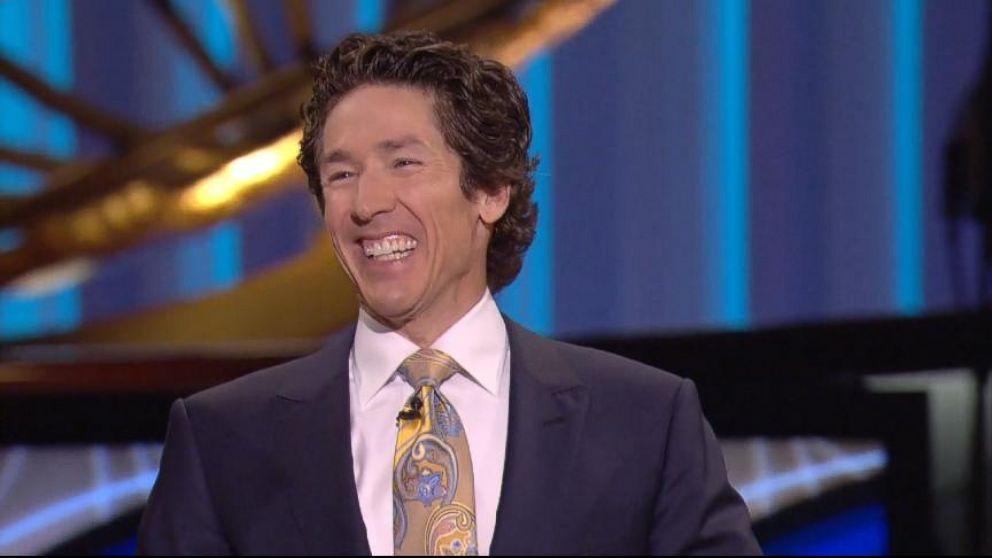
Joel Osteen has preached that most people are good people
who have good hearts. This is a lie, for the heart is "
deceitful above all things  and beyond cure" (Jeremiah 17:9).
What I find most tragic about this is that there are great wrong answers being presented in many churches (or so they would call themselves) across the United States. These churches today are filled with people who give great wrong answers, used to build up their false premises. For Ptolemy, his false premise was that the earth was the center of the solar system (it's not), but for false preachers like Joel Osteen, his premise is that humans are innately or typically good (whereas Romans 3:10 says otherwise, stating, "There is no one righteous"). Because of this, the "sermons" and books Joel Osteen writes tend to illustrate that humans are good people just in need of some self help (one of his best-selling books is titled Become a Better You). On the foundation of this premise Joel Osteen can say some nice sounding things. He can say them with passion and positivity. He can provide some great answers that are elloquent and well structured. However, because the premises he supports are false, all his own answers are just more great wrong answers.

The term "great wrong answer" is my word for this phenomenon. The Bible calls great wrong answers lies, and it calls those who give great wrong answers false teachers/preachers. These people speak lies that lead people astray from the truth found in Scripture. God describes false preachers as men and women who are "prophesying to you, false visions, divinations, idolatries and the delusions of their own minds" (Jeremiah 14:14). Jesus says that false preachers will tend to be well liked (see Luke 6:26) and that these people will "perform great signs and wonders to deceive, if possible, even the elect [God's chosen people]" (Matthew 24:24). Jesus also tells His followers to beware of "false prophets. They come to you in sheep's clothing, but inwardly they are ferocious wolves," which means on the outside what they are saying sounds nice and seems right but the truth is their words are full of lies and are dangerous (Matthew 7:15).

So, why do people listen to great wrong anserws (lies) from vocal innacurate pastors (false preachers)? The answer is, we like to hear them. These lies meet the desires of our foolish and sinful hearts. Paul writes that "the time will come when people will not put up with sound doctrine [Biblical truth]. Instead, to suit their own desires, they will gather around them a great number of teachers to say what their itching ears want to hear. They will turn their ears away from the truth and turn aside to myths" (2 Tomothy 4:3-4). The unfortunate reality is that we are born sinners who do not want to hear God's truth, afterall "there is no one who understands; there is no one who seeks God" (Romans 3:11).

The only way for us to want to listen to the truth is for God to change our hearts entirely. God tells His chosen people in the book of Ezekiel, "I will give you a new heart, [Not one that is changed or made better, but a completely new heart] and put a new spirit in you; I will remove from you your heart of stone and give you a heart of flesh. And I will put my Spirit in you and move you to follow my decrees and be careful to keep my laws" (36:26-27). This is the only way people can listen and follow the truth. Jesus tells His followers, "I am the way and the truth and the life" (John 14:6). This means that no one can find truth apart from Jesus, and no one can speak truth if Jesus has not revealed it to them. The truth is that truth can only come from those who have a heart for God.

"Hold on, if the truth be known
Truth is more than "to each his own"
... If the truth be known
Do you really wanna know?"
- Newsboys

Image result for god's not dead 3
There's a line from David A. White's character in
God's Not Dead: A Light in the Darkness that I appreciate.
When he's asked what is truth he responds,
"Truth is a person - the person of Jesus Christ."
We, as believers, see that God reveals His truth in His word, the Bible. Paul writes that "all Scripture is God-breathed," meaning that God spoke it (2 Timothy 3:16). In the book of Psalms it is written "the word of the Lord is right and true" (Psalm 33:4). This might surprise some of my readers, but the truth is that the truth is always true. Jesus even says that the truth found in the Scriptures will never cease to be true. He says, "Heaven and earth will pass away, but My words will never pass away" (Matthew 24:35).

If we too believe in the truth and believe what God's word says, then we will not pass away either. We will have eternal life (John 3:16). The Scriptures say that a person who reads the Word of God and dwells on its truth is "like a tree planted by streams of water, which yields its fruit in season and whose leaf does not wither - whatever they do prospers" (Psalm 3:1). Those who read and trust in God's word will never wither. They will never die.

Brothers and sisters, this world is filled with some great wrong answers, and they could come from anyone and anywhere, but God says that only His word is true. It's true today. It's true tomorrow. It'll be true throughout all eternity. It will never lead anyone astray. It will always lead to life and life in abundance; more than any false preacher could deceivingly promise. If you are looking for right answers/good answers, then there is only one place to look. God says, "call on Me and come and pray to Me, and I will listen to you. You will seek Me and find Me when you seek Me with all your heart" (Jeremiah 23:12-13). In a world of great wrong answers, there's is nothing better than finding and belieiving in the perfect best answer.


Sources

Sunday, February 9, 2020

Mark 10:18 Only God is Good

Image result for god is good
Mark 10:18
"'Why do you call me good?' Jesus answered. 'No one is good—except God alone.'"

There is a story in the gospels (the four books about Jesus' life titled Matthew, Mark, Luke and John), and this story appears in three of the four gospels. It's the story where Jesus encountered the rich young ruler, and this story begins with a very wealthy man falling on his knees before Jesus and saying, "Good teacher, what must I do to inherit eternal life?" (Mark 10:17). In the accounts of this story in Mark, Matthew and Luke Jesus then asks the rich young ruller this, "Why do you call me good?...No one is good—except God alone." (Luke 18:19). What Jesus and the rich young ruler discuss next is worth reading and understanding, however this post will focus on Jesus' first statement in this conversation, "There is only One who is good" (Matthew 19:17).

Unlike as it is often used in the english language, the word "good" biblically is not a synonym for the word "great." The word Jesus uses for good is ἀγαθός (agathos) and it's the same word used in Matthew 7:18 where Jesus talks about how "only good trees can bear good fruit" and in Luke 19:17 where Jesus says that the father will say, "Well done, my good servant!" to those who can be trusted with what God gives them. This good is not about a quality of a product or person but about the level of righteousness that something can have; it's about how close something follows God and abides in Him. Bibilically, the opposite of "good" is not "bad," but "evil," and those who are evil seek to oppose God and stay away from what He commands. We, as believers, should keep this in mind, when we use the word "good" in our daily lives. From a Biblical standpoint, only God and everything He deems righteous is good; only what abides in Him can be good.

Since only God is good, we need to look to Him as the sole example for what is good. We, as believers, will not find anything good where God is not present. Everything we long for that is apart from God will never satisfy our thirst for good things, but Jesus says, "Whoever drinks the water I give them will never thirst" (John 4:14). Jesus later on explains the good water flowing from Him is His words. If we have faith in what Jesus says and who He is, then we drink His water that satisfies. Jesus says, "Whoever believes in Me, as Scripture has said, rivers of living water will flow from within them" (John 7:38). In answer to the rich young ruler's question, Jesus says that believing in Him is how anyone can inherit eternal life. When the living water of Jesus Christ wells up inside of us, we can then pass it on to others. We can lead them to who God He is and what He says, so that they too can have eternal life. We can direct them to the one who is good and from whom all good things flow; God alone.

Sources

Sunday, January 12, 2020

What are Three Genres in the Bible?

Image result for reading the bible"
The Bible is a big book and we, as believers, should read it because it is the word of God. As Paul writes, "all Scripture is God breathed," so as to say every word in our Bibles came from God's mouth (1 Timothy 3:16). Reading the Bible is how we let God speak to us. Of course, though many of us want to hear God's word, the massive scope of the Bible can be abit intimidating. For me I find that I am less intimidated by the scope of something, when I can narrow it down to a set of contrete categories. For the Bible it is easy for me to think of the books of the Bible (and their chapters) as fitting into one of three types of main genres. These three types of main genres are narrative, poetry and prose. Understanding what type of genre I am reading in the Bible helps me to understand how I should read that book and or chapter, and what I can expect during my time reading it.

The first main genre is narrative. Narrative books of the Bible tell stories. These books feature a beginning, a middle and an end to their stories. In narrative books there are alot of characters involved and most of them are interacting with each other in meaningful ways. A few easy ways to keep track of the characters in a narrative book are to look out for archetypes, which is a set category that narrative characters can fit into. Some of the most common archetypes in the Bible are prophets (they speak the word of God), kings (they rule nations and are the heads of kingdoms), judges (they are appointed by God to rebuke the wicked and fight evil) and holy beings (they are spiritual beings that live in Heaven and are often described with awesome imagery). Jesus Christ is all of these. The narrative books of the Bible are written to tell stories, but they are also written to relay histroical accounts of events that happened on Earth.

Example of Narrative text: Exodus 7:14-25

The First Plague: Water Turned to Blood
14 Then the Lord said to Moses, “Pharaoh's heart is hardened; he refuses to let the people go. 15 Go to Pharaoh in the morning, as he is going out to the water. Stand on the bank of the Nile to meet him, and take in your hand the staff that turned into a serpent. 16 And you shall say to him, ‘The Lord, the God of the Hebrews, sent me to you, saying, “Let my people go, that they may serve me in the wilderness.” But so far, you have not obeyed. 17 Thus says the Lord, “By this you shall know that I am the Lord: behold, with the staff that is in my hand I will strike the water that is in the Nile, and it shall turn into blood. 18 The fish in the Nile shall die, and the Nile will stink, and the Egyptians will grow weary of drinking water from the Nile.”’” 19 And the Lord said to Moses, “Say to Aaron, ‘Take your staff and stretch out your hand over the waters of Egypt, over their rivers, their canals, and their ponds, and all their pools of water, so that they may become blood, and there shall be blood throughout all the land of Egypt, even in vessels of wood and in vessels of stone.’”

20 Moses and Aaron did as the Lord commanded. In the sight of Pharaoh and in the sight of his servants he lifted up the staff and struck the water in the Nile, and all the water in the Nile turned into blood. 21 And the fish in the Nile died, and the Nile stank, so that the Egyptians could not drink water from the Nile. There was blood throughout all the land of Egypt. 22 But the magicians of Egypt did the same by their secret arts. So Pharaoh's heart remained hardened, and he would not listen to them, as the Lord had said. 23 Pharaoh turned and went into his house, and he did not take even this to heart. 24 And all the Egyptians dug along the Nile for water to drink, for they could not drink the water of the Nile.

25 Seven full days passed after the Lord had struck the Nile.

The second main genre is poetry. Poems written in the Bible are reflective, in that they are written to reflect upon what has happened in the past, what is currently happening in the present and what will happen in the future. They are written in a poetic nature, so these books feature figurative language such as metaphors, analogies and hyperbolees (of course poems about God do not have hyperbolee written as unrealistic exageration. Rather it is hyperbolee that illustrates the magnitude of God on a grand and infiite scale). Though poetry in the Bible is written with figurative intent, this does not mean that it was not also written with literal intent. The poets of Scripture wrote their poems using figurative language to illustrate reality; usually the reality of God and who He is.

Example of Poety text: Jeremiah 10:6-10

6 No one is like you, Lord;
    you are great,
    and your name is mighty in power.
7 Who should not fear you,
    King of the nations?
    This is your due.
Among all the wise leaders of the nations
    and in all their kingdoms,
    there is no one like you.

8 They are all senseless and foolish;
    they are taught by worthless wooden idols.
9 Hammered silver is brought from Tarshish
    and gold from Uphaz.
What the craftsman and goldsmith have made
    is then dressed in blue and purple—
    all made by skilled workers.
10 But the Lord is the true God;
    he is the living God, the eternal King.
When he is angry, the earth trembles;
    the nations cannot endure his wrath.

The third main genre is prose. Books that are prose are written not to tell stories, or be figurative, but they are written to be read and heeded. In prose the messages God wants to relay through His word are tpyically the clearest out of all the three main genres. Prose books are books of the law, letters written by early Christians from one to another or lists of events and genealogies. Some books written in prose might list or address some things that are supernatural and appear as though they should be read figuratively, but all list of events, genealogies, laws and written essays are meant to be read as soberly as someone reads a contract, a legal document or a family tree.

Example of Prose text: 1 John 1:5-10

Light and Darkness, Sin and Forgiveness
5 This is the message we have heard from him and declare to you: God is light; in him there is no darkness at all. 6 If we claim to have fellowship with him and yet walk in the darkness, we lie and do not live out the truth. 7 But if we walk in the light, as he is in the light, we have fellowship with one another, and the blood of Jesus, his Son, purifies us from all[a] sin.

8 If we claim to be without sin, we deceive ourselves and the truth is not in us. 9 If we confess our sins, he is faithful and just and will forgive us our sins and purify us from all unrighteousness. 10 If we claim we have not sinned, we make him out to be a liar and his word is not in us.

Sources

Wednesday, December 25, 2019

Isaiah 9:6 (To Us a Child is Born)

Image result for nativity painting
Isaiah 9:6
For to us a child is born,
    to us a Son is given,
    and the government will be on His shoulders.
And He will be called
    Wonderful Counselor, Mighty God,
    Everlasting Father, Prince of Peace.

The greatest of all kings has come to us.

He has not come as a high ruler, but as a lowly baby born in a manger.

He has not come as part of a condition, but as a free gift for all mankind.

The weight of the world is on His shoulders, and He bears it well for our sake.

He is the wisest above all, and He has knowledge of all things.

He is the God who performed miracles for Moses and Elijah.

He is a man which all can call Abba, and He will never cease to be.

He is a bringer of peace, so that He may overcome all the world's chaos.

He is the Messiah, our Savior, the one whom the prophets foretold.

He is God with us.

He is Jesus.

"Glory to God in the highest heaven,
    and on earth peace to those on whom His favor rests" (Luke 2:14)

Merry Christmas, Everyone!

Sources